|
|
| (41 intermediate revisions by the same user not shown) |
| Line 1: |
Line 1: |
| = A Course Introduction= | | ==Course Introduction== |
| | |
| {| | | {| |
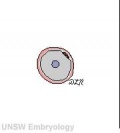
| | '''From this''' [[File:Early_zygote.jpg|210px]]
| | | [[File:Mark_Hill.jpg|150px|Dr Mark Hill]] |
| | '''to this''' [[File:Newborn.jpg|300px]] '''in 9 months'''
| |
| |}
| |
| | |
| {|
| |
| | [[File:Mark_Hill.jpg|100px|Dr Mark Hill]] | |
|
| |
|
| Course coordinator | | Course coordinator |
| | This first lecture will be a general introduction to the course and the subject of Embryology. | | | This first lecture will be a general introduction to the course and the subject of Embryology. |
|
| |
|
| :'''Firstly''', an introduction to the course, its content and assessment and an opportunity to ask questions. | | :'''Firstly''', an introduction to the course, its content, method of presentation, assessment and an opportunity to ask questions. |
| | |
| | :'''Secondly''', some historic background to the subject and related current Australian trends. I do not expect you to remember specific historic dates or statistical data, this is provided as an introduction to the topic. |
|
| |
|
| :'''Secondly''', some historic background to the subject and related current Australian trends.
| |
|
| |
|
| '''MH''' - I do not expect you to remember specific historic dates or statistical data, this is provided as an introduction to the topic.
| | [[Lecture - 2015 Course Introduction|current 2015 Course Introduction]] |
|
| |
|
| | I like my lectures to be interactive, so ask me questions and I will also be asking you questions! |
| |} | | |} |
|
| |
|
| ==Objectives== | | ==Lecture Objectives== |
| {| | | {| |
| | width=380px|<html5media height="384" width="352">File:Human development 001.mp4</html5media> | | | width=380px|<html5media height="384" width="352">File:Human development 001.mp4</html5media> |
|
| |
|
| [[Media:Human development 001.mp4|'''Click Here''' to play on mobile device]] | | [[Media:Human development 001.mp4|'''Click Here''' to play on mobile device]] |
| | | | | valign=top| |
| # Understand the course objectives and assessment. | | # Understand the course objectives and assessment. |
| # Brief understanding of Australian statistical data. | | # Brief understanding of the historic background of embryology. |
| # Broad overview of Human Development. | | # Brief understanding of Australian data. |
| | # Broad overview of human development. |
|
| |
|
| {{Human development movie 1}}
| |
| |}
| |
| == ANAT2341 Course Background 2014==
| |
| I will spend the first half going through the current course design, online support and assessment criteria. This is an opportunity to ask the course coordinator questions about the course.
| |
|
| |
|
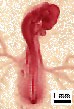
| [[File:Human_Carnegie_stage_1-23.jpg|600px]] | | [[File:ECHO360_icon.gif|right|link=https://lectures.unsw.edu.au/ess/portal/section/691ba9a0-7c35-4ad2-8fd0-846db7771557]] |
| | [[Lecture_-_2014_Course_Introduction|Lecture 1]] - [https://lectures.unsw.edu.au/ess/echo/presentation/e7ad0e2e-7a04-4719-ae59-c8523afd76d9 Rich Media Playback] | [https://lectures.unsw.edu.au/ess/echo/presentation/e7ad0e2e-7a04-4719-ae59-c8523afd76d9/media.m4v Vodcast Playback] | [https://lectures.unsw.edu.au/ess/echo/presentation/e7ad0e2e-7a04-4719-ae59-c8523afd76d9/media.mp3 Podcast Playback] |
|
| |
|
| '''The first 8 weeks of human development.'''
| |
|
| |
|
| '''Links:''' [[ANAT2341_Embryology_2014|Course Homepage]]
| | {{Human development movie 1}} |
| | |} |
|
| |
|
| == Textbooks == | | == ANAT2341 Course Outline== |
| | [[File:Human_Carnegie_stage_1-23.jpg|thumb|250px|alt=Human embryonic development week 1 to 8|Human embryonic development (week 1 to 8)]] |
| | I will spend the first half going through the current course design, online support and assessment criteria. This is an opportunity to ask the coordinator questions about the course. |
|
| |
|
| Either of the textbooks listed below are recommended for this course and page references to both are given in each lecture. Both textbooks available at campus bookshop. There are additional embryology textbooks that can also be used, consult course organizer. See also [[Embryology Textbooks]]
| |
|
| |
|
| ===The Developing Human: Clinically Oriented Embryology (9th ed.)===
| | '''Course Links:''' [[ANAT2341_Embryology_2014|Homepage]] | [[Media:ANAT2341 Embryology 2014.pdf|Overview]] | [[ANAT2341_Course_Timetable_2014|Timetable]] | [http://moodle.telt.unsw.edu.au/course/view.php?id=9262 Moodle] | [[Media:ANAT2341 Lecture 1 - 2014 Course Introduction.pdf|Lecture 1 PDF]] |
| {|
| |
| | [[File:The Developing Human, 9th edn.jpg|120px]] | |
| | Keith L. Moore, T.V.N. Persaud, Mark G. Torchia. (2011). <i>The Developing Human: clinically oriented embryology</i> (9<sup>th</sup> ed.). Philadelphia: Saunders. Description: xix, 540 p. p. : ill., ports. Publisher: Philadelphia, PA : Saunders/Elsevier, c2013. ISBN: 9781437720020 (pbk.) NLM Unique ID: 101561564 | |
|
| |
|
| The following chapter links only work with a UNSW connection.
| | Lecture Archive: [[Lecture_-_2013_Course_Introduction|2013]] | [[Lecture_-_2012_Course_Introduction|2012]] | [[Lecture_-_2011_Course_Introduction|2011]] |
| |}
| |
| {|
| |
| |
| |
| * [http://er.library.unsw.edu.au/er/cgi-bin/eraccess.cgi?url=http://www.mdconsult.com/books/page.do?eid=4-u1.0-B978-1-4377-2002-0..00001-1&isbn=978-1-4377-2002-0&uniqId=330028653-2#4-u1.0-B978-1-4377-2002-0..00001-1 Chapter 1 - Introduction to the Developing Human]
| |
| * [http://er.library.unsw.edu.au/er/cgi-bin/eraccess.cgi?url=http://www.mdconsult.com/books/page.do?eid=4-u1.0-B978-1-4377-2002-0..00002-3&isbn=978-1-4377-2002-0&uniqId=330028653-2#4-u1.0-B978-1-4377-2002-0..00002-3 Chapter 2 – First Week of Human Development]
| |
| * [http://er.library.unsw.edu.au/er/cgi-bin/eraccess.cgi?url=http://www.mdconsult.com/books/page.do?eid=4-u1.0-B978-1-4377-2002-0..00003-5&isbn=978-1-4377-2002-0&uniqId=330028653-2#4-u1.0-B978-1-4377-2002-0..00003-5 Chapter 3 – Second Week of Human Development]
| |
| * [http://er.library.unsw.edu.au/er/cgi-bin/eraccess.cgi?url=http://www.mdconsult.com/books/page.do?eid=4-u1.0-B978-1-4377-2002-0..00004-7&isbn=978-1-4377-2002-0&uniqId=330028653-2#4-u1.0-B978-1-4377-2002-0..00004-7 Chapter 4 – Third Week of Human Development]
| |
| * [http://er.library.unsw.edu.au/er/cgi-bin/eraccess.cgi?url=http://www.mdconsult.com/books/page.do?eid=4-u1.0-B978-1-4377-2002-0..00005-9&isbn=978-1-4377-2002-0&uniqId=330028653-2#4-u1.0-B978-1-4377-2002-0..00005-9 Chapter 5 – Fourth to Eighth Weeks of Human Development]
| |
| * [http://er.library.unsw.edu.au/er/cgi-bin/eraccess.cgi?url=http://www.mdconsult.com/books/page.do?eid=4-u1.0-B978-1-4377-2002-0..00006-0&isbn=978-1-4377-2002-0&uniqId=330028653-2#4-u1.0-B978-1-4377-2002-0..00006-0 Chapter 6 – Ninth Week to Birth: The Fetal Period]
| |
| * [http://er.library.unsw.edu.au/er/cgi-bin/eraccess.cgi?url=http://www.mdconsult.com/books/page.do?eid=4-u1.0-B978-1-4377-2002-0..00007-2&isbn=978-1-4377-2002-0&uniqId=330028653-2#4-u1.0-B978-1-4377-2002-0..00007-2 Chapter 7 - Placenta and Fetal Membranes]
| |
| * [http://er.library.unsw.edu.au/er/cgi-bin/eraccess.cgi?url=http://www.mdconsult.com/books/page.do?eid=4-u1.0-B978-1-4377-2002-0..00008-4&isbn=978-1-4377-2002-0&uniqId=330028653-2#4-u1.0-B978-1-4377-2002-0..00008-4 Chapter 8 – Body Cavities and Diaphragm]
| |
| * [http://er.library.unsw.edu.au/er/cgi-bin/eraccess.cgi?url=http://www.mdconsult.com/books/page.do?eid=4-u1.0-B978-1-4377-2002-0..00009-6&isbn=978-1-4377-2002-0&uniqId=330028653-2#4-u1.0-B978-1-4377-2002-0..00009-6 Chapter 9 – Pharyngeal Apparatus, Face, and Neck]
| |
| * [http://er.library.unsw.edu.au/er/cgi-bin/eraccess.cgi?url=http://www.mdconsult.com/books/page.do?eid=4-u1.0-B978-1-4377-2002-0..00010-2&isbn=978-1-4377-2002-0&uniqId=330028653-2#4-u1.0-B978-1-4377-2002-0..00010-2 Chapter 10 – Respiratory System]
| |
| * [http://er.library.unsw.edu.au/er/cgi-bin/eraccess.cgi?url=http://www.mdconsult.com/books/page.do?eid=4-u1.0-B978-1-4377-2002-0..00011-4&isbn=978-1-4377-2002-0&uniqId=330028653-2#4-u1.0-B978-1-4377-2002-0..00011-4 Chapter 11 – Alimentary System]
| |
| | | |
| * [http://er.library.unsw.edu.au/er/cgi-bin/eraccess.cgi?url=http://www.mdconsult.com/books/page.do?eid=4-u1.0-B978-1-4377-2002-0..00012-6&isbn=978-1-4377-2002-0&uniqId=330028653-2#4-u1.0-B978-1-4377-2002-0..00012-6 Chapter 12 - Urogenital System]
| |
| * [http://er.library.unsw.edu.au/er/cgi-bin/eraccess.cgi?url=http://www.mdconsult.com/books/page.do?eid=4-u1.0-B978-1-4377-2002-0..00013-8&isbn=978-1-4377-2002-0&uniqId=330028653-2#4-u1.0-B978-1-4377-2002-0..00013-8 Chapter 13 - Cardiovascular System]
| |
| * [http://er.library.unsw.edu.au/er/cgi-bin/eraccess.cgi?url=http://www.mdconsult.com/books/page.do?eid=4-u1.0-B978-1-4377-2002-0..00014-X&isbn=978-1-4377-2002-0&uniqId=330028653-2#4-u1.0-B978-1-4377-2002-0..00014-X Chapter 14 - Skeletal System]
| |
| * [http://er.library.unsw.edu.au/er/cgi-bin/eraccess.cgi?url=http://www.mdconsult.com/books/page.do?eid=4-u1.0-B978-1-4377-2002-0..00015-1&isbn=978-1-4377-2002-0&uniqId=330028653-2#4-u1.0-B978-1-4377-2002-0..00015-1 Chapter 15 - Muscular System]
| |
| * [http://er.library.unsw.edu.au/er/cgi-bin/eraccess.cgi?url=http://www.mdconsult.com/books/page.do?eid=4-u1.0-B978-1-4377-2002-0..00016-3&isbn=978-1-4377-2002-0&uniqId=330028653-2#4-u1.0-B978-1-4377-2002-0..00016-3 Chapter 16 – Development of Limbs]
| |
| * [http://er.library.unsw.edu.au/er/cgi-bin/eraccess.cgi?url=http://www.mdconsult.com/books/page.do?eid=4-u1.0-B978-1-4377-2002-0..00017-5&isbn=978-1-4377-2002-0&uniqId=330028653-2#4-u1.0-B978-1-4377-2002-0..00017-5 Chapter 17 – Nervous System]
| |
| * [http://er.library.unsw.edu.au/er/cgi-bin/eraccess.cgi?url=http://www.mdconsult.com/books/page.do?eid=4-u1.0-B978-1-4377-2002-0..00018-7&isbn=978-1-4377-2002-0&uniqId=330028653-2#4-u1.0-B978-1-4377-2002-0..00018-7 Chapter 18 – Development of Eyes and Ears]
| |
| * [http://er.library.unsw.edu.au/er/cgi-bin/eraccess.cgi?url=http://www.mdconsult.com/books/page.do?eid=4-u1.0-B978-1-4377-2002-0..00019-9&isbn=978-1-4377-2002-0&uniqId=330028653-2#4-u1.0-B978-1-4377-2002-0..00019-9 Chapter 19 – Integumentary System]
| |
| * [http://er.library.unsw.edu.au/er/cgi-bin/eraccess.cgi?url=http://www.mdconsult.com/books/page.do?eid=4-u1.0-B978-1-4377-2002-0..00020-5&isbn=978-1-4377-2002-0&uniqId=330028653-2#4-u1.0-B978-1-4377-2002-0..00020-5 Chapter 20 – Human Birth Defects]
| |
| * [http://er.library.unsw.edu.au/er/cgi-bin/eraccess.cgi?url=http://www.mdconsult.com/books/page.do?eid=4-u1.0-B978-1-4377-2002-0..00021-7&isbn=978-1-4377-2002-0&uniqId=330028653-2#4-u1.0-B978-1-4377-2002-0..00021-7 Chapter 21 – Common Signaling Pathways Used During Development]
| |
| * [http://er.library.unsw.edu.au/er/cgi-bin/eraccess.cgi?url=http://www.mdconsult.com/books/page.do?eid=4-u1.0-B978-1-4377-2002-0..00030-8&isbn=978-1-4377-2002-0&uniqId=330028653-2#4-u1.0-B978-1-4377-2002-0..00030-8 Appendix : Discussion of Clinically Oriented Problems]
| |
| |}
| |
|
| |
|
| ===Larsen’s Human Embryology (4th ed.)===
| | [Mailto:m.hill@unsw.edu.au Email me] for any additional information or to make an appointment. |
| {|
| | == Textbooks == |
| | [[File:Larsen's human embryology 4th edn.jpg|120px]]
| |
| | Schoenwolf, G.C., Bleyl, S.B., Brauer, P.R. and Francis-West, P.H. (2009). Larsen’s Human Embryology (4th ed.). New York; Edinburgh: Churchill Livingstone.
| |
|
| |
|
| | * Either of the textbooks listed below are recommended for this course and page references to both are given in each lecture. |
| | * Both textbooks available at campus bookshop and online to [[Embryology_Textbooks_-_UNSW|UNSW students]]. |
| | * There are [[Embryology Textbooks|additional embryology textbooks]] that can also be used, consult course organizer. |
|
| |
|
| The following chapter links only work with a UNSW connection and can also be accessed through this [http://searchfirst.library.unsw.edu.au/primo_library/libweb/action/search.do?vid=UNSW&fn=search&vl(freeText0)=UNSW_SFX14190000000047996 UNSW Library connection]. | | {{UNSW textbook - The Developing Human}} |
| |}
| |
| {|
| |
| |
| |
| * [http://www.mdconsult.com/books/linkTo?type=bookPage&isbn=978-0-443-06811-9&eid=4-u1.0-B978-0-443-06811-9..10001-6 Chapter 1 - Gametogenesis, Fertilization, and First Week]
| |
| * [http://www.mdconsult.com/books/linkTo?type=bookPage&isbn=978-0-443-06811-9&eid=4-u1.0-B978-0-443-06811-9..10002-8 Chapter 2 - Second Week: Becoming Bilaminar and Fully Implanting]
| |
| * [http://www.mdconsult.com/books/linkTo?type=bookPage&isbn=978-0-443-06811-9&eid=4-u1.0-B978-0-443-06811-9..10003-X Chapter 3 - Third Week: Becoming Trilaminar and Establishing Body Axes]
| |
| * [http://www.mdconsult.com/books/linkTo?type=bookPage&isbn=978-0-443-06811-9&eid=4-u1.0-B978-0-443-06811-9..10004-1 Chapter 4 - Fourth Week: Forming the Embryo]
| |
| * [http://www.mdconsult.com/books/linkTo?type=bookPage&isbn=978-0-443-06811-9&eid=4-u1.0-B978-0-443-06811-9..10005-3 Chapter 5 - Principles and Mechanisms of Morphogenesis and Dysmorphogenesis]
| |
| * [http://www.mdconsult.com/books/linkTo?type=bookPage&isbn=978-0-443-06811-9&eid=4-u1.0-B978-0-443-06811-9..10006-5 Chapter 6 - Fetal Development and the Fetus as Patient]
| |
| * [http://www.mdconsult.com/books/linkTo?type=bookPage&isbn=978-0-443-06811-9&eid=4-u1.0-B978-0-443-06811-9..10007-7 Chapter 7 - Development of the Skin and Its Derivatives]
| |
| * [http://www.mdconsult.com/books/linkTo?type=bookPage&isbn=978-0-443-06811-9&eid=4-u1.0-B978-0-443-06811-9..10008-9 Chapter 8 - Development of the Musculoskeletal System]
| |
| * [http://www.mdconsult.com/books/linkTo?type=bookPage&isbn=978-0-443-06811-9&eid=4-u1.0-B978-0-443-06811-9..10009-0 Chapter 9 - Development of the Central Nervous System]
| |
| |
| |
| * [http://www.mdconsult.com/books/linkTo?type=bookPage&isbn=978-0-443-06811-9&eid=4-u1.0-B978-0-443-06811-9..10010-7 Chapter 10 - Development of the Peripheral Nervous System]
| |
| * [http://www.mdconsult.com/books/linkTo?type=bookPage&isbn=978-0-443-06811-9&eid=4-u1.0-B978-0-443-06811-9..10011-9 Chapter 11 - Development of the Respiratory System and Body Cavities]
| |
| * [http://www.mdconsult.com/books/linkTo?type=bookPage&isbn=978-0-443-06811-9&eid=4-u1.0-B978-0-443-06811-9..10012-0 Chapter 12 - Development of the Heart]
| |
| * [http://www.mdconsult.com/books/linkTo?type=bookPage&isbn=978-0-443-06811-9&eid=4-u1.0-B978-0-443-06811-9..10013-2 Chapter 13 - Development of the Vasculature]
| |
| * [http://www.mdconsult.com/books/linkTo?type=bookPage&isbn=978-0-443-06811-9&eid=4-u1.0-B978-0-443-06811-9..10014-4 Chapter 14 - Development of the Gastrointestinal Tract]
| |
| * [http://www.mdconsult.com/books/linkTo?type=bookPage&isbn=978-0-443-06811-9&eid=4-u1.0-B978-0-443-06811-9..10015-6 Chapter 15 - Development of the Urogenital System]
| |
| * [http://www.mdconsult.com/books/linkTo?type=bookPage&isbn=978-0-443-06811-9&eid=4-u1.0-B978-0-443-06811-9..10016-8 Chapter 16 - Development of the Pharyngeal Apparatus and Face]
| |
| * [http://www.mdconsult.com/books/linkTo?type=bookPage&isbn=978-0-443-06811-9&eid=4-u1.0-B978-0-443-06811-9..10017-X Chapter 17 - Development of the Ears and Eyes]
| |
| * [http://www.mdconsult.com/books/linkTo?type=bookPage&isbn=978-0-443-06811-9&eid=4-u1.0-B978-0-443-06811-9..10018-1 Chapter 18 - Development of the Limbs]
| |
| |}
| |
|
| |
|
| '''Publisher Links:''' [http://www.us.elsevierhealth.com/product.jsp?isbn=9781416037064 The Developing Human: Clinically Oriented Embryology] | [http://www.elsevier.com/wps/find/bookdescription.cws_home/713963/description#description Larsen’s Human Embryology] | | {{UNSW textbook - Larsen's Human Embryology}} |
|
| |
|
| ==Recent History==
| |
|
| |
|
| '''1965''' - Neural Crest Research [[Embryology History - Nicole Le Douarin|Nicole Le Douarin]].
| |
|
| |
|
| '''1977''' - Thalidomide and its affects on development. [[Abnormal_Development_-_Thalidomide|Thalidomide]]
| | ==History== |
| | [[History - Embryologists]] | [[Embryology History]] | [[Human Embryo Collections]] |
|
| |
|
| '''1978''' - First IVF baby born. [[In_Vitro_Fertilization|In Vitro Fertilization]]
| | [[File:BrauneB1.jpg|400px|alt=The Position of the Uterus and Fetus at Term (1872)]] |
|
| |
|
| '''1996''' - "[[:File:Dolly_the_sheep.jpg|Dolly the sheep]]" First adult somatic cell cloning using the process of nuclear transfer.
| | [[Embryology_History_-_17th_and_18th_Century_Anatomies|17-18C]] Braune - The Position of the Uterus and Fetus at Term (1872) |
|
| |
|
| ===Nobel Prizes===
| | {| class="wikitable mw-collapsible mw-collapsed" |
| [[File:IVF-Louise Brown.jpg|thumb|Louise Brown, the first IVF baby as an adult.]]
| | ! [[Human Embryo Collections]] |
| Much of the modern history of Medicine/Embryology is documented in the [http://nobelprize.org/nobel_prizes/medicine/laureates/ Nobel Prizes for Medicine]. Remember that these award dates reflect findings that have proven to be scientific key breakthroughs from earlier dates.
| |
| | |
| * '''1986''' [http://nobelprize.org/nobel_prizes/medicine/laureates/1986/index.html discoveries of growth factors]
| |
| * '''1995''' [http://nobelprize.org/nobel_prizes/medicine/laureates/1995/index.html genetic control of early embryonic development]
| |
| * '''2002''' [http://nobelprize.org/nobel_prizes/medicine/laureates/2001/index.html cell cycle]
| |
| * '''2002''' [http://nobelprize.org/nobel_prizes/medicine/laureates/2002/index.html cell death]
| |
| * '''2007''' [http://nobelprize.org/nobel_prizes/medicine/laureates/2007/index.html embryonic stem cells]
| |
| * '''2010''' [http://nobelprize.org/nobel_prizes/medicine/laureates/2010/index.html development of in vitro fertilisation] (More? [[Assisted Reproductive Technology]])
| |
| | |
| === 21st Century === | |
| [[File:Stem_cell_artificial_trachea_and_bronchi.jpg|thumb|Stem cell artificial trachea and bronchi]]
| |
| * '''2000''' - Human Genome Complete [[Molecular_Development_-_Genetics#Human_Genome|Human Genome]]
| |
| * '''2001''' talk given by [[Embryology History - Robert Winston|Robert Winston]] "Engineering Reproduction: Will We Still Be Human At The End of the 21st Century".
| |
| * '''2009''' - Induced pluripotent stem (iPS) [[Stem Cells]]
| |
| * '''2011''' - First Successful Transplantation of a Synthetic Tissue Engineered Windpipe [http://ki.se/ki/jsp/polopoly.jsp?d=130&a=125055&l=en&newsdep=130 Karolinska Institute] | [http://www.ucl.ac.uk/news/news-articles/1107/11070701 University College London] | [http://news.bbc.co.uk/2/hi/health/7735696.stm BBC News]
| |
| :"An international team designed and built the nanocomposite tracheal scaffold and produced a specifically designed bioreactor used to seed the scaffold with the patient´s own stem cells. The cells were grown on the scaffold inside the bioreactor for two days before transplantation to the patient. Because the cells used to regenerate the trachea were the patient's own, there has been no rejection of the transplant and the patient is not taking immunosuppressive drugs."
| |
| * '''2012''' - MRI of Childbirth
| |
| {| border='0px'
| |
| |- | | |- |
| | valign="bottom"|{{Birth MRI movie 1}} | | | [[File:Wilhelm_His.jpg|200px]] |
| |}
| |
|
| |
|
| | Wilhelm His (1831-1904) |
|
| |
|
| :'''Links:''' [[Embryology History]]
| | His's Normentafel (Normal Table) |
|
| |
|
| ==Human Development Overview==
| | [[Book - Anatomy Of Human Embryos|Anatomie menschlicher Embryonen]] (1882) |
| [[File:Human development timeline graph 02.jpg|800px]] | | | [[File:Keibel_Mall_034a.jpg|200px]] |
| | | [[File:Keibel_Mall_034b.jpg|300px]] |
| | |- |
| | | [[File:Franz Keibel.jpg|150px]] |
|
| |
|
| | Franz Keibel (1861 - 1929) |
|
| |
|
| == Applied Embryology ==
| | Franz Keibel and Curt Elze (1908) Normal Plates of the Development of the Human Embryo |
| [[File:Australia_mothers_and_babies_2009.jpg|thumb|Australia’s mothers and babies (2009) cover]] | | | [[File:Keibel1908_plate01.jpg|200px]] |
| The information is based upon data from the publication "Australia's mothers and babies 2009"<ref>Li Z, McNally L, Hilder L & Sullivan EA 2011. Australia’s mothers and babies 2009. Perinatal statistics series no. 25. Cat. no. PER 52. Sydney: AIHW National Perinatal Epidemiology and Statistics Unit. Viewed 3 January 2012 <http://www.aihw.gov.au/publication-detail/?id=10737420870></ref> and is provided for educational purposes only. The original full publication is available online from [http://www.aihw.gov.au/publication-detail/?id=10737420870 AIHW Perinatal statistics series no. 25].
| | | [[File:Keibel1908_plate02.jpg|200px]] |
| | |- |
| | | [[File:Franklin Mall 03.jpg|150px]] |
|
| |
|
| ===More births===
| | Franklin Mall (1862-1917) |
| [[Image:Australian-births 2007.png|thumb|Australian Births by Year]]
| |
|
| |
|
| In 2009 in Australia, a total 294,540 women gave birth to 299,220 babies. There were 296,791 live births and 2,341 fetal deaths. There was a 0.8% increase in the total number of births compared with 2008, but there was a fall in the rate of females aged 15-44 years in the whole population who gave birth (from 64.4 per 1,000 in 2008 to 63.6 per 1,000 in 2009).
| | [[Carnegie Collection]] |
|
| |
|
| * '''2009''' - 296,791 live births and 2,341 fetal deaths
| | | colspan=2|[[File:Human Carnegie stage 10-23.jpg|400px]] |
| * '''2008''' - 294,737 live births and 2,188 fetal deaths
| | |- |
| * '''2007''' - 292,027 live births and 2,177 fetal deaths
| | | Begun by Dr. Hideo Nishimura (1912–1995) |
|
| |
|
| ===Mothers===
| | [[File:Shiota_Hill_Yamada.jpg|200px]] |
| | Developed by Kohei Shiota and currently curated by Shigehito Yamada. |
|
| |
|
| * Average maternal age in 2009 was '''30.0 years''' compared with 29.0 years in 2000.
| | [[Kyoto Collection]] |
| * Approximately 41.6% of women were having their first baby.
| | | colspan=2|[[File:Human_Carnegie_stage_1-23.jpg|400px]] |
| ** Average age for first time mothers was 27.9 in 2009 which was 0.3 years younger than for 2008.
| | |} |
| ** Of all first-time mothers, 13.7% were aged 35 years or older in 2009, compared with 10.3% in 2000.
| |
| * ART was used by 3.6% of women who gave birth. (from available data on assisted reproductive technology (ART) where available)
| |
|
| |
|
| ===Antenatal factors=== | | {| class="wikitable mw-collapsible mw-collapsed" |
| | ! [[Animal_Development|Animal Models]] |
| | |- |
| | | [[File:Frog-icon.png|right|80px|link=Frog Development]] |
| | | {{Frog links}} |
|
| |
|
| Smoking while pregnant was reported by 14.5% of all mothers and by 37.0% of teenage mothers. In the 4 jurisdictions where data on the number of antenatal visits were available, 97.3% of women who gave birth at 32 weeks or more gestation attended at least one antenatal visit, with 91.9% attending 5 or more.
| | * The frog was used by many of the early embryology investigators and currently there are many different molecular mechanisms concerning development of the frog. |
| | * The eggs develop independently, in relative synchrony and are relatively see-through making staging and observation fairly easy. |
| | * The frog was a key model for the study of the process of gastrulation. |
| | |- |
| | | [[File:Chick icon.jpg|80px|link=Chicken Development]] |
| | | |
| | {{Chicken}} |
|
| |
|
| ===Indigenous mothers=== | | * The chicken embryo develops and hatches in 20-21 days and historically these were one of the first embryos to be studied. Cutting a window in the egg shell allows direct observation of the embryo. The Hamburger & Hamilton chicken development staging allowed researchers to develop this model as a key embryological tool. |
| | * Key research involved the transplanting of quail cells into chick embryos, to later identify their contribution to different embryonic structures, particularly for somite, neural tube and neural crest development. |
| | |- |
| | | [[File:Mouse.jpg|right|80px|link=Mouse Development]] |
| | | {{Mouse}} |
|
| |
|
| Of women who gave birth during 2008, 3.8% identified as Aboriginal or Torres Strait Islander. The average age of Indigenous mothers was 25.1 years, compared with 30.1 years for non-Indigenous mothers. Over half of the Aboriginal and Torres Strait Islander mothers reported smoking during pregnancy (50.9%), compared with 14.4% of non-Indigenous women who gave birth.
| | * The mouse has always been a good embryological model, easy to generate (litters 8-20) and quick (21d). |
| | | * Mouse embryology really expanded when molecular biologists used mice for gene knockouts. |
| ===Labour and delivery===
| | |- |
| | | | [[File:Fly-icon.png|right|80px|link=Fly Development]] |
| About 3.8% of women who gave birth during 2009 identified as Aboriginal or Torres Strait Islander. Indigenous mothers are younger than non-Indigenous mothers; their average age was 25.3 years, compared with 30.2 years for non-Indigenous mothers. Smoking during pregnancy was reported by half (49.6%) of Indigenous mothers. Of Indigenous mothers who gave birth at 32 weeks or more gestation, 76.8% attended 5 or more antenatal visits.
| | | [[Fly Development|Fly Development]] - The fruitfly (drosophila) was and is the traditional geneticist's tool. It has been transformed to an magnificent embryologist's tool, with developmental mechanisms being uncovered in this system combined with homolgy gene searches in other species. The fly genome was one of the first to be been completely sequenced. In early development nurse cells ''sacrifice'' their cytoplasmic contents to allow egg growth and early pattern formation is through the localization of maternal messenger RNAs (mRNAs). |
| | |- |
| | | | [[File:C elegans.jpg|right|80px|link=Worm Development]] |
| | | [[Worm Development|Worm Development]] - Early embryological studies of the worm ''Caenorhabditis elegans'' (C.Elegans, so called because of its "elegant" curving movement) characterized the fate of each and every cell in the worm through all stages of development. This worm has recently had its entire genome sequenced. |
| | |- |
| | | [[File:Zebrafish-icon.png|right|80px|link=Zebrafish Development]] |
| | | [[Zebrafish Development|Zebrafish Development]] - Zebrafish are seen as the latest and greatest "model' for embryological development studies. They can be easily genetically altered and develop as practically "see through" embryos, all internal development can be clearly observed from the outside in the living embryo. |
| | |} |
| {| | | {| |
| | [[Image:Galletti1770_breech_01.jpg|300px]]
| |
| | [[Image:Birth caesarean.jpg|300px]]
| |
| |- | | |- |
| |Breech presentation (Galletti, 1770) | | | [[Assisted_Reproductive_Technology|In Vitro Fertilization]] (1978) |
| |Birth caesarean | | | [[Stem Cells]] (1981) |
| | | [[Molecular Development]] |
| | |- |
| | | [[File:Intracytoplasmic_sperm_insemination.jpg|300px]] |
| | | [[File:Hematopoietic_and_stromal_cell_differentiation.jpg|300px]] |
| | | [[File:Hedgehog signaling pathway.jpg|300px]] |
| |} | | |} |
| | ==Australian Data== |
| | 1 August 2014 at 03:53:30 PM (Canberra time), the resident population of Australia is projected to be: 23,550,233. |
|
| |
|
| ===Baby outcomes===
| | [[File:Australian-births_2011.jpg|600px]] |
|
| |
|
| In 2009, 8.2% of babies were born preterm (before 37 completed weeks of gestation) and 0.9% post-term (42 weeks gestation or more). Overall, 6.2% of liveborn babies were of low birthweight (less than 2,500 grams) and this nearly doubled (10.8%) among mothers who smoking during pregnancy. Less than 1.5% of liveborn babies had a low Apgar score (measure of the baby’s condition at birth). The perinatal death rate was 9.8 per 1,000 births in 2009, which comprised fetal and neonatal death rates of 7.8 per 1,000 births and 3.0 per 1,000 live births respectively.
| |
| {| | | {| |
| | [[Image:Aus_multiple_birth_graph.png|300px]]
| | ! [[Australian Statistics]] |
| | [[Image:Perinatal mortality rate NSW 1992-2002.png|300px]]
| |
| |- | | |- |
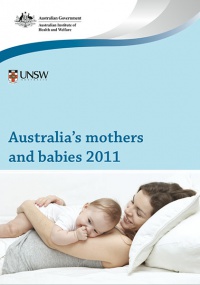
| | Australian multiple birth data | | | width=250px|[[File:Australia_mothers_and_babies_2011.jpg|link=Australia’s_mothers_and_babies_2011|200px]] |
| | Perinatal mortality rate NSW 1992-2002 | | | width=250px|[[File:Assisted reproductive technology in Australia and New Zealand 2010.jpg|200px]] |
| | |- |
| | | Australia’s mothers and babies (2011) |
| | | Assisted reproductive technology in Australia and New Zealand (2010) |
| | |- |
| | | Average maternal age in 2011 was [[Genetic_risk_maternal_age|'''30.0''']] years, the same as 2009 but still more than the earlier years (2000, 29.0 years; 2002, 29.4 years). |
| | | [[Assisted Reproductive Technology]] (ART) was used by '''3.8%''' (2009, 3.6%) of women who gave birth. |
| |} | | |} |
| ====Assisted Reproductive Technology====
| |
| [[File:Assisted reproductive technology in Australia and New Zealand 2009.jpg|thumb|Assisted reproductive technology in Australia and New Zealand 2009.]]
| |
| '''Assisted reproductive technology in Australia and New Zealand 2009.'''<ref>Wang YA, Macaldowie A, Hayward I, Chambers GM, & Sullivan EA 2011. '''Assisted reproductive technology in Australia and New Zealand 2009.''' Assisted reproduction technology series no. 15. Cat. no. PER 51. Canberra: AIHW. [http://www.aihw.gov.au/publication-detail/?id=10737420465 Online Summary] | [http://www.aihw.gov.au/WorkArea/DownloadAsset.aspx?id=10737420484&libID=10737420483 PDF]</ref> [http://www.aihw.gov.au/media-release-detail/?id=10737420483 9 Nov 2011]
| |
| * In 2009, there were 70,541 assisted reproductive technology (ART) treatment cycles undertaken in Australian and New Zealand.
| |
| * Of these cycles, 17.2% resulted in a live delivery (the birth of at least one liveborn baby).
| |
| * In total, 13,114 liveborn babies were born following ART treatment in 2009.
| |
| * The most important trend in ART treatment has been the increase of single embryo transfer, from 48.3% in 2005 to 69.7% in 2009.
| |
| * This trend has resulted in significant reduction of multiple delivery rate from 14.1% in 2005 to 8.2% in 2009. (More? [[Assisted Reproductive Technology]])
| |
|
| |
|
| ==References== | | {| class="wikitable mw-collapsible mw-collapsed" |
| <references/>
| | ! Victoria - 10 most reported birth anomalies |
| | |- |
| | | Based upon statistics from the Victorian Perinatal Data Collection Unit in Victoria between 2003-2004. |
| | |- |
| | | |
| | {| |
| | |- |
| | | width=120px| [[File:Hypospadia_classifications.jpg|100px|Hypospadia]] |
| | | '''Hypospadias''' (More? [[Development Animation - Genital Male External]] | [[Genital_System_-_Abnormalities#Hypospadia|Genital Abnormalities - Hypospadia]]) |
| | |- |
| | | [[File:Hydronephrosis.jpg|100px|Obstructive Defect of the Renal Pelvis]] |
| | | '''Obstructive Defects of the Renal Pelvis''' (obstructive defects of the renal pelvis, uteropelvic junction obstruction, pelvo-uterero junction obstruction) Term describing a developmental renal abnormality due to partial or complete blockage of the drainage of the kidney pelvis requiring surgical correction. The blockage can also have several causes including: unusual [[U#ureter|ureter]] twisting or bending, [[U#ureter|ureter]] compression by a blood vessel, malformations of the muscular wall. The blockage leads to an accumulation of urine in the affected region, with several potential effects: [[N#nephron|nephron]] damage from compression (hydronephrosis); decreased urine output leading to lack of amniotic fluid ([[O#oligohydramnios|oligohydramnios]]); respiratory development effects due to the lack of [[A#amniotic fluid|amniotic fluid]]. |
|
| |
|
| ==Australian Developmental Abnormalities==
| | * The most common type of obstruction is at the uteropelvic junction (UPJ), between the junction of the ureter and the kidney. |
| | * Blockage lower as the ureter enters the bladder, the ureterovesicular junction (UVJ), usually involves only one kidney and the back flow enlarges the affected ureter ([[M#megaureter|megaureter]]). |
|
| |
|
| [[Image:Abnormal AusData81-92Graph.png|thumb|Australian Data 1981-92]] | | (More? [[Renal System - Abnormalities]] | [[Renal System Development]]) |
| The ten most frequently reported birth defects in Victoria between 2003-2004
| |
|
| |
|
| # [[H#hypospadia|Hypospadias]]
| | |- |
| # [[O#obstructive renal pelvis defect|Obstructive Defects of the Renal Pelvis]] or [[O#Obstructive Genitourinary Defects|Obstructive Genitourinary Defects]]
| | | [[File:Ventricular_Septal_Defect.jpg|100px|Ventricular Septal Defect]] |
| # [[V#ventricular septal defect|Ventricular Septal Defect]]
| | | '''Ventricular Septal Defect''' (More? [[Cardiovascular_System_-_Abnormalities#Ventricular_Septal_Defect|Cardiovascular Abnormalities - Ventricular Septal Defect]]) |
| # [[C#congenital dislocated hip|Congenital Dislocated Hip]]
| |
| # [[Trisomy 21]] or Down syndrome
| |
| # [[H#hydrocephalus|Hydrocephalus]] | |
| # [[C#cleft palate|Cleft Palate]]
| |
| # [[Trisomy 18]] or Edward Syndrome - multiple abnormalities of the heart, diaphragm, lungs, kidneys, ureters and palate 86% discontinued.
| |
| # Renal Agenesis/Dysgenesis - reduction in neonatal death and stillbirth since 1993 may be due to the more severe cases being identified in utero and being represented amongst the increased proportion of terminations (approximately 31%).
| |
| # [[C#cleft lip|Cleft Lip]] and Palate - occur with another defect in 33.7% of cases.
| |
|
| |
|
| <gallery>
| | [[File:Basic_Heart_Development_Timeline.jpg|600px]] |
| Image:Hypospadia_classifications.jpg|Hypospadia
| |
| Image:Hydronephrosis.jpg|Obstructive Defect of the Renal Pelvis
| |
| File:Ventricular_Septal_Defect.jpg|Ventricular Septal Defect | |
| Image:Congenital_dislocation_hip.jpg|Congenital dislocation hip
| |
| Image:Trisomy21male.jpg|Trisomy 21 male
| |
| Image:Hydrocephalus.jpg|Hydrocephalus
| |
| Image:cleft_palate.jpg|Cleft palate
| |
| Image:Trisomy18male.jpg|Trisomy 18 male
| |
| Image:Bilateral_cleft_palate.jpg|Bilateral cleft palate
| |
| </gallery>
| |
|
| |
|
| | Heart Development Timeline (see [[Basic Cardiac Embryology]]) |
| | |- |
| | | [[File:Congenital_dislocation_hip.jpg|100px|Congenital dislocation hip]] |
| | | '''Congenital Dislocated Hip''' (More? [[Musculoskeletal_System_-_Abnormalities#Developmental_Dysplasia_of_the_Hip|Musculoskelal Abnormalities - Congenital Dislocation of the Hip (CDH)]]) |
| | (DHH, [[C#congenital dislocated hip|congenital dislocated hip]], congenital hip dislocation, congenital hip dysplasia) Term describes a spectrum of musculoskeletal disorders of hip instability due either to the femoral head being able to move outside the acetabulum (luxation or dislocation), or abnormally within the acetabulum (subluxation or partial dislocation). This includes presentation following a normal examination of the hips in the newborn period ([[O#Ortolani test|Ortolani]] and [[B#Barlow test|Barlow]] tests). When detected can be managed with splinting (Denis-Browne splint) allows the hip joint to develop normally and does not require surgery. If undetected and left untreated, the hip joint develops abnormally and surgical reduction is required. (More? [[Musculoskeletal System Development]]) |
| | |- |
| | | [[File:Chromosome-_trisomy.jpg|100px|Trisomy 21 male]] |
| | | '''Trisomy 21 or Down syndrome''' - (More? [[Trisomy 21]]) |
|
| |
|
| ===Teratology===
| | |- |
| Teratology is the study of abnormalities of development. Some examples of historic teratology studies.
| | | [[File:Hydrocephalus.jpg|100px|Hydrocephalus]] |
| | | '''Hydrocephalus''' (More? [[Neural_System_-_Abnormalities#Hydrocephalus|Neural Abnormalities - Hydrocephalus]] | [http://www.ninds.nih.gov/disorders/hydrocephalus/detail_hydrocephalus.htm NINDS - Hydrocephalus Fact Sheet] | [http://www.hydrocephalus.org.au Hydrocephalus Support Association] | [http://nhfonline.org/treatment.php USA National Hydrocephalus Foundation]) |
| | |- |
| | | [[File:cleft_palate.jpg|100px|Cleft palate]] |
| | | '''Cleft Palate''' (More? [[Development Animation - Palate 1]] | [[Development Animation - Palate 2]] | [[Head_Development_-_Abnormalities#Cleft_Palate|Cleft Palate]]) |
| | |- |
| | | [[File:Chromosome-_trisomy 18.jpg|100px|Trisomy 18 male]] |
| | | '''Trisomy 18 or Edward Syndrome''' - multiple abnormalities of the heart, diaphragm, lungs, kidneys, ureters and palate 86% discontinued (More? [[Trisomy 18]]) |
| | |- |
| | | |
| | | '''Renal Agenesis/Dysgenesis '''- reduction in neonatal death and stillbirth since 1993 may be due to the more severe cases being identified in utero and being represented amongst the increased proportion of terminations (approximately 31%). (More? [[Renal_System_-_Abnormalities#Renal_Agenesis.2FDysgenesis|Renal Abnormalities - Renal Agenesis]]) |
|
| |
|
| * '''Rubella''' <pubmed>1879476</pubmed>
| | |- |
| * '''Thalidomide''' <pubmed>331548</pubmed>
| | | [[File:Bilateral_cleft_palate.jpg|100px|Bilateral cleft palate]] |
| | | | '''Cleft Lip and Palate''' - occur with another defect in 33.7% of cases. (More? [[Head_Development_-_Abnormalities#Cleft_Lip|Cleft Lip]]) |
| | |
| :'''Links:''' [[Human_Abnormal_Development|Human Abnormal Development]] | [[Abnormal_Development_-_Thalidomide|Thalidomide]] | [[Abnormal_Development_-_TORCH_Infections|TORCH Infections]] | [http://teratology.org/jfs/History.html History of Teratology] | [http://www.mja.com.au/public/issues/177_11_021202/for10634_fm.html eMJA - Gregg's congenital rubella]
| |
| | |
| ==Human Development Timeline==
| |
| | |
| [[File:Human development timeline graph 02.jpg]] | |
| | |
| ==Movies==
| |
| {|
| |
| | valign="bottom"|{{Embryo stage movie 1}}
| |
| | valign="bottom"|{{Birth MRI movie 1}}
| |
| | valign="bottom"|{{Human development movie 1}}
| |
| | valign="bottom"|{{Human development movie 2}}
| |
| | valign="bottom"|{{Human timeline movie}}
| |
| |} | | |} |
|
| |
| :[[Lecture_-_Fertilization|Lecture 2 - Fertilization]]
| |
|
| |
| ==External Links==
| |
| {{External Links}}
| |
|
| |
| The following are links to free iBooks available for background reading.
| |
|
| |
| ===Gray's Embryology===
| |
| {|width=100%
| |
| | [[File:Grays_Anatomy_Embryology_cover.jpg|150px]]
| |
| |
| |
| * [http://itunes.apple.com/au/book/grays-anatomy-embryology/id510009979?mt=11 iTunes link] | [http://itunes.apple.com/us/book/grays-anatomy-embryology/id510009979?ls=1 iBooks Store]
| |
| * Description - an extract of the embryology content from [[Embryology_History#Anatomy_of_the_Human_Body|Anatomy of the Human Body]] By Henry Gray Philadelphia: Lea & Febiger, 1918.
| |
| * Releases
| |
| ** First Edition - Jan 2012
| |
| ** Second Edition - March 2012 Repaired formatting and image display issues related to Pad rotated display and minor editing issues.
| |
| * Print length 169 pages, 41.6 MB, Language English.
| |
| * The current website also includes numerous images from this textbook (see [[:Category:Gray's 1918 Anatomy|Category:Gray's 1918 Anatomy]]).
| |
| |} | | |} |
| | ==Human Development== |
|
| |
|
| ===The Carnegie Staged Embryos===
| | [[File:Human development timeline graph 02.jpg|800px]] |
| {|width=100%
| |
| | [[File:The Carnegie Staged Embryos cover.jpg|150px]]
| |
| |
| |
| * [http://itunes.apple.com/au/book/the-carnegie-staged-embryos/id510004473?mt=11 iTunes link] | [http://itunes.apple.com/us/book/the-carnegie-staged-embryos/id510004473?ls=1 iBook Store]
| |
| * Description - Imagine the excitement of seeing this incredible early period of human development for the first time. Now consider that much of our initial understanding of human development is based upon study of historic embryo collections. You can now look at these historic images of the first 8 weeks after fertilisation and explore for yourself the changes that occur in human development during this key period. This current book is designed as an atlas of the Carnegie embryo stages with some brief notes and additional information covering the first 8 weeks of development. These images are from from the beginning of last century and are one of the earliest documented series of human embryos collected for basic research and medical education on development. I hope you enjoy learning about the amazing early events that begin to make and shape us. This is the second book in a series of educational releases from UNSW Embryology.
| |
| * Release: First Edition - Mar 12, 2012 ISBN 978-0-7334-3148-7
| |
| * Print Length 82 Pages, 25.8 MB Language English.
| |
| * [[:File:The Carnegie Staged Embryos.pdf|PDF Preview version]] 3.87 MB (Read the associated information, this is an edited '''educational preview version''' with many features not functioning).
| |
|
| |
|
| * The current website also includes numerous embryo images from this textbook (see [[Embryonic Development]] and [[Carnegie Embryos]]).
| |
| |}
| |
|
| |
|
|
| |
|
|
| |
|
| {{2014ANAT2341 footer}} | | {{2014ANAT2341 footer}} |