Atlas of the Development of Man 1

Handatlas der entwicklungsgeschichte des menschen: Volume 1 (Atlas of the Development of Man Volume 1)
--Mark Hill 09:10, 22 October 2011 (EST) This textbook was published in 1907 in the German language. The first volume is more of a textbook of early development, while the second volume is an atlas of images. None of the images from the first volume have yet been added, while the second volume images have all been added to the site as Atlas of the Development of Man 2.
- Links: Julius Kollmann
Contents

Atlas of the Development of Man 1 Introduction - l
Part 1. Predevelopment
I. The egg
Structural unit yolk-rich egg (bird's egg) 21
II. maturation the egg
III. Fertilization
VI. Site of fertilisation
a) Place of fertilization and pregnancy theories 36
b) durability and resistance of the spermatozoa 38
c) ovulation 41
d) Detachment of the egg from the ovary, and the walk through the tubes 47
Part 2. Ontogeny, Blastogenesis
I. Cleavage, Segmentation
a) External appearances of cleavage 55
b) Internal appearances of cleavage, mitosis 59
- Occurrence and transformation of the dark chromatic nuclear division figure 60
- Occurrence and transformation of the achromatic (colorless) core figure, called the mitotic spindle 62
- Radiations in the yolk 63
c) Amitosis or division of cells without the appearance of cell division 68
d) Growth and regeneration in conjunction with the process of cell division
II. Germinal vesicle (vesicula blastodermica) with the germinative (area embryonalis), viewed from outside
III. Germinal vesicle internal structure
a) Theory of endoderm origin and the gastrulation 87
b) Germ layer, blastosphere and blastula. Homology of the primary germ layers 92
The Fundamental organs 96
IV. Primitive streak and neurenteric canal
V. Notochord
- Front and rear end of the notochord 106
- Sub-chordal line 109
- Origin of the notochord 109
VI. Middle germ layer, mesoderm 113
a) root zone and parietal zone 114
b) the origin of the middle germ layer 118
c) Histogenetic significance of germ layers 123
d) Homology of the middle germ 128
e) The term germ layer 128
VII. Somites, Protovertebrae and their derivatives: myotome, sclerotome; head cavities
a) The somites, protovertebrae (somite) 131
- The first unit of the vertebra and the emergence of its derivatives, the myotome and the sclerotome 136
- Special features of the trunk myotomes 137
b) head cavities and somites of the head, somites 140
ii mesenchyme 145
VIII. The boundaries of the bead
Part 3. The fetal membranes
A. Fetal attachments 155
I. The amnion and the serosa 155
Amniotic fluid, cerebrospinal fluid 159
II. Chorion 163
III. The yolk sac vesicle omphalomesenterica 167
IV. Allantois 171
a) The vesicular allantois 171
b) The allantois without bladder, abdominal stalk 174
B. The fetal envelopes 176
I. The deciduous membranes, Membrana deciduae 176
a) decidua vera 179
b) Decidua reflexa 182
II. Placenta 188
Part 4. Developmental stages of body shape
I. The human embryo until the end of the neural canal
II. human embryos until the onset of neck flexion
I. Month (age 15-21 days; 206
III. Human embryos, I month (age 21-30 days). . . 219
IV. human embryos, II months (age 5 weeks) 226
V. Human embryos, II months (age 6 weeks) 230
VI. Human embryos, II months (age 7 - weeks) 232
- The specific physiognomy of embryos 233
- Palingenesis and Cänogenesis 237
- Prototype of vertebrates 238
- Criteria for distinguishing normal and pathologic human embryos 241
- Length and age provisions of the embryos and foetuses 243
Part 5. Development of systems and organs
I. Development of the skeletal system
General 247
a) Development of the head skeleton, Craniogenesis 249
- Intramembranous bones of the head skeleton; fontanelles and switching-bone 257
- Development of the bony canals for vessels and nerves the base of the skull 261
- Metamerism of the vertebrate head 264
b) Development of the trunk skeleton 267
c) Development of the extremities and masses of the limb cytoskeleton 274
- Upper limb 276
- Lower limb 281
- Development of the joints 285
- Differences between arm and leg 285
- Origin of the five-pointed extremities of vertebrates and of humans 287
II. Development of the muscular system
General 287
a) muscles of the trunk 290
- Development of the dorsal trunk muscles 290
- Development of the ventral trunk muscles 291
- Muscles of the head, eyes and tympanic cavity 292
- Development of the neck muscles 297
- Muscles of the thorax 298
- Diaphragm 298
- Muscles of the abdominal wall 301
b) muscles of the extremities 302
- General 302
- Upper limb 303
- Lower extremity 306
III. The intestinal system
a) General and appearance of the head, middle and end intestine 310
b) Further outline of the intestinal system in the head, front, middle, pelvic and caudal 315
- Foregut with branchial arch and branchial arch slits 318
- Development the face with the help of the frontal process and the first branchial arch 324
d) The Sharks 329
Development of the oral cavity 332
f) The organs of the oral cavity 335
- Tongue 335
- Tonsils 336
- Glands of the foregut, salivary glands 337
- Principle of development of glands 337
g) Development of the intestinal tube 340
Foregut 340
- The stomach 341
- The duodenum 343
- The midgut 343
The Endoderm 347
h) development of the teeth 351
i) glands of the intestinal system 361
Thyroid and thymus 361
The thyroid gland, thyroid gland 361
Thymus 363
In addition to the thyroid gland 365
Carotid gland 366
The Liver 366
The pancreas. Pancreas 369
k) the airways and lungs 371
Respiratory system 371
l) peritoneum 375
Omentum and mesentery commune 375
m) coelom 386
Development of the urogenital system 393
I. The renal systems 393
- General 393
- The pronephros, pronephros 395
- The mesonephros. Mesonephros, usually called Wolffian body 397
- The metonephros, usually called permanent kidney 40
- The adrenal glands 409
II. Development of the genital organs 410
- The gonads 410
- Testis, epididymis and Wolffian 414
- Development of the spermatozoa 416
- Development of the ovary from the indifferent gonad. 418
III. Development of gender-transitions 422
- Rudimentary organs, which are descended from the primitive kidney 428
- The urogenital, urinary bladder and the outer genitalia 430
- Development of the anal opening 438
- The anal region of the embryo in its earliest form 439
- Descent of the ovaries and testes 441
IV. Development of the vascular system
- General 445
a) The heart of 446
- The embryonic heart within 450
- Sinus venosus and its transformation 155
- The earliest system of the heart 457
b) Development of the arterial system 460
- The aortic arch 460
- The arteries of the mesonephros and the kidney 466
c) development of the venous system 468
- Veins of the extremities.
- Veins of the upper extremity 480
- Veins of the lower extremity 481
d) The circulation of the fetus until birth 482
- The cycle after birth 487
e) blood, blood vessels and lymphatics 488
- The lymphatic system 492
V. Development - the nervous system
a) The Central Nervous System 493
- General 493
- Inner expansion of the primitive neural canal. 502
- Formation of the anterior motor roots 504
- Origin of dorsal root ganglia and the posterior sensory roots 505
b) The expansion of the three brain vesicles 508
c) The expansion of the posterior cerebral vesicle 509
- The cerebellum, cerebellum 512
d) The middle cerebral vesicle 514
e) The anterior cerebral bubble 515
f) The hemispheres of the cerebrum, Hemisphaerium. 520
- Expansion of the inner hemisphere vesicles 522
- Corpus striatum 525
g) Rhinencephalon, olfactory bulb 526
- The ependyma of the anterior cerebral vesicle, choroid plexus and the Lateral ventricle 527
- St. exterior remodeling of the hemisphere sulci and gyri 529
- Primary amphibians, sulci primarii 531
ii Peripheral Nervous System 536
- General 536
- Cranial nerve 540
- Olfactory nerve 540
- Hypoglossal 549
- Formation of the head. Kephalogenesis 550
1) Nerve Trunk 554
iii) Sympathetic nervous system
- Sympathetic nerve in the head 560
- Neck portion of the sympathetic 561
- The chest portion of the sympathetic trunk 562
Integnment and sense organs
I. integument 563
- Development of hair
- Sebaceous glands sebaceae 567
- Schweissdrilsen, glands sadoriparae 568
- Mammary glands, glands lactiparae 569
- The nails, Ungues 571
II. Development of the eye 572
- Development of the lens. Lens Cristallina 575
- The vitreous, vitreous body 589
- Further development of optic cup, and fetal ocular fissure, Retina 580
- The retina 582
- Choroid and development of the iris, sclera and cornea 585
- The development of the accessory organs 589
- The lachrymal 590
- General remarks on the eye 592
III. Development of the Ear 593
- The otic vesicle 593
- Internal development of the labyrinth 598
- The internal design of the sacs and ampoules 601
- The wrappings of the labyrinth 604
- Development of the middle ear 607
- Development of the auricle and external auditory ganges 615
- Conversion of the first gill pouch 619
IV development of the olfactory organ 620
V. development of the taste organ 629
From the birth and development after birth
About Inheritance 633
a) Laws of Inheritance 639
Factors of Inheritance 641
b) inheritance of acquired characteristics 643
c) theories of inheritance 646
Subject Index 652
Sample Images
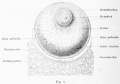
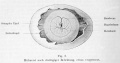
Fig. 1. Human egg from a mature follicle


- Kollmann Atlas 1: Predevelopment | Ontogeny | Fetal membranes | Body shape | Systems and organs | Kollmann Atlas 1 | Kollmann Atlas 2 | Julius Kollmann
- Kollmann Atlas 2: Gastrointestinal | Respiratory | Urogenital | Cardiovascular | Neural | Integumentary | Smell | Vision | Hearing | Kollmann Atlas 1 | Kollmann Atlas 2 | Julius Kollmann
Glossary Links
- Glossary: A | B | C | D | E | F | G | H | I | J | K | L | M | N | O | P | Q | R | S | T | U | V | W | X | Y | Z | Numbers | Symbols | Term Link
Cite this page: Hill, M.A. (2026, September 20) Embryology Atlas of the Development of Man 1. Retrieved from https://embryology.med.unsw.edu.au/embryology/index.php/Atlas_of_the_Development_of_Man_1
- © Dr Mark Hill 2026, UNSW Embryology ISBN: 978 0 7334 2609 4 - UNSW CRICOS Provider Code No. 00098G
