|
|
| (68 intermediate revisions by 2 users not shown) |
| Line 1: |
Line 1: |
| =Muscle Development = | | ==Organogenesis Lab== |
| [[File:Actin_myosin_crossbridge_3D_animation.gif]] [[File:Actin_myosin_crossbridge_3D_animation.jpg]][[File:Muscle fiber types.jpg]]
| |
|
| |
|
| == Introduction ==
| | Please note the different location for this week’s practical class: Wallace Wurth Teaching Lab 116. |
| This laboratory concerns the development and differentiation of skeletal muscle, muscle stem cells, hypertrophy, fibre type differentiation and plasticity. After an introductory tutorial on muscle development, students do exercises looking at experimental images of muscle undergoing hypertrophy and fibre type conversion. Students do some simple analysis of the images in their work groups and we discuss the results. Then we look at a series of images from a mouse that expresses a transgene that influences fibre type choice and we discuss what has happened using the same structure.
| |
|
| |
|
| ==Objectives==
| |
|
| |
|
| # Understand the origin, differentiation and development of skeletal muscle tissue.
| | '''PRACTICAL CLASS PROGRAM''' |
| # Know what is meant by patterning, conversion and adult plasticity of muscle fibre type.
| |
| # Develop an understanding of research methods for studying skeletal muscle development and function.
| |
|
| |
|
| [[File:Sarcomere_animation.gif]]
| | * Weekly Quiz + revision (15 minutes) |
| | * Practical class activities (90 minutes) |
| | * Practical Class Revision (15 minutes) |
|
| |
|
|
| |
|
| [http://www.lab.anhb.uwa.edu.au/mb140/CorePages/Muscle/Muscle.htm#SKELETAL Skeletal Muscle Histology]
| | '''PRACTICAL CLASS ACTIVITIES (90 minutes)''' |
|
| |
|
| | * Fertile egg dissections, stage definition, and annotations of structures (first 60 minutes) |
| | * Observation of skeletal preparations of chicken and mouse foetuses (first 60 minutes) |
| | * Group presentation of annotated embryo images (final 30 minutes) |
|
| |
|
| == Lab Tutorial ==
| |
| Today's laboratory will begin with a tutorial presentation on muscle development and research into muscle disorders. With any new concepts or terms, firstly use the [[#Terms|terms]] list below or the [[#Glossary_Links|glossary]] and feel free to ask questions about any concepts you may not still understand during or after the presentation.
| |
|
| |
|
| '''Slides for tutorial:''' [[Media:Part 1 muscle development 2012.pdf|Muscle Development - Part 1]] | | '''LEARNING OBJECTIVES''' |
|
| |
|
|
| | * Understanding early neurulation, mesoderm and heart development, and being able to identify the defining structures in the chicken embryo. |
| ==Lab Exercises==
| | * Understanding craniofacial and limb development and being able to identify the defining structures in chicken embryos. |
| | * Understanding the development of the musculoskeletal system and being able to identify the defining structures in chicken embryos. |
| | * Be able to apply basic practical laboratory skills and work with embryo and regeneration models. |
| | * Be able to work effectively within a small team to complete academic tasks. |
| | * Be able to present embryonic observations effectively and appropriately to an audience |
| | * Be able to self-manage and work independently with an ability to take responsibility for their own learning, and an appreciation of the value of learning. |
|
| |
|
| [[Media:Part 2 Muscle Development 2012.pdf|Muscle Development - Part 2]]
| |
|
| |
|
|
| |
|
| The following exercises need to be completed in your group in today's lab and are not part of your assessment questions.
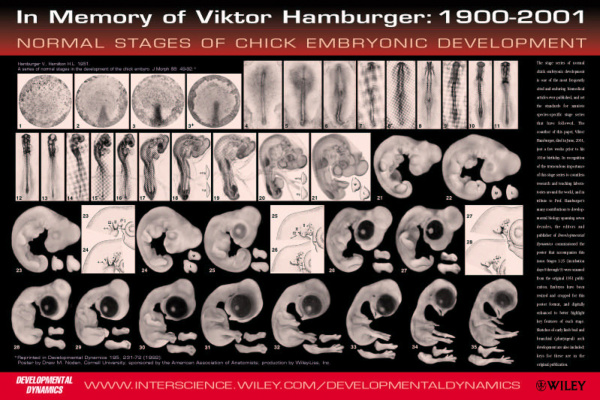
| | [[File:Chicken_Embryo_Hamburger_stages.jpg|600px|link=Hamburger Hamilton Stages]] |
|
| |
|
| There are 3 exercises:
| | ''These are the Hamburger stages of chicken development'' |
|
| |
|
| 1. Maturation Hypertrophy - In your groups, design a method to estimate the degree of hypertrophy that occurs during the transition from birth to adulthood. Use the rulers to make rough measurements on the screen and then estimate the degree of hypertrophy as a mean increase in fibre size. Discuss the result as a class.
| |
|
| |
|
| 2. The role of satellite cells in muscle hypertrophy - class discussion of data presented in a recent paper [http://www.ncbi.nlm.nih.gov/pubmed/21828094 - McCarthy et al. 2011]
| | See also the [https://www.jove.com/video/306/windowing-chicken-eggs-for-developmental-studies JoVE article on chicken egg preparation]: <pubmed>18989413</pubmed> |
|
| |
|
| * Synergist Ablation (SA) surgery - removal of the muscles surrounding the plantaris in the lower hind limb to increase the work load.
| |
| * BRDU - Bromodeoxyuridine; can be used as a marker to identify cells that have recently undergone DNA replication for cell division.
| |
|
| |
|
| 3. Fibre type shift - Discuss an experiment on fibre type shift that has been induced by chronic low frequency stimulation [http://www.ncbi.nlm.nih.gov/pubmed/16439424 - Martins et al. 2006]
| | ===Additional Chicken Links=== |
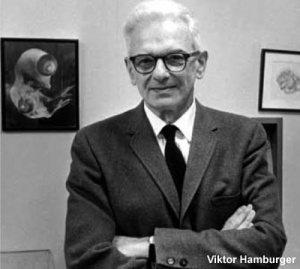
| | [[File:Viktor Hamburger.jpg|thumb|alt=Viktor Hamburger|link=Embryology History - Viktor Hamburger|Viktor Hamburger (1900 – 2001)]] |
| | More about chicken embryogenesis: [[Chicken Development]] | [[Hamburger Hamilton Stages]] |
| | <br> |
| | {{Chicken links}} |
| | <br> |
|
| |
|
| == Lab 7 Assessment Questions==
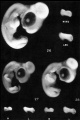
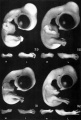
| | <gallery> |
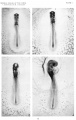
| | File:HHstage1-4.jpg|stage 1-4 |
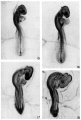
| | File:HHstage5-10.jpg|stages 5-10 |
| | File:HHstage11-14.jpg|stages 11-14 |
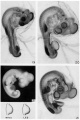
| | File:HHstage15-18.jpg|stages 15-18 |
| | File:HHstage19-21.jpg|stages 19-21 |
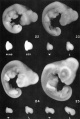
| | File:HHstage22-25.jpg|stages 22-25 |
| | File:HHstage26-28.jpg|stages 26-28 |
| | File:HHstage29-32.jpg|stage 29-32 |
| | </gallery> |
|
| |
|
| Answer the questions shown below on your own student page.
| | [[File:Mouse_vs_Human_embryogenesis.jpg]] |
|
| |
|
| 1. (a) Provide a one sentence definition of a muscle satellite cell (b) In one paragraph, briefly discuss two examples of when satellite cells are activated ?
| | ''This figure compares the human and mouse developmental stages'' |
|
| |
|
| 2. In one brief paragraph, describe what happens to skeletal muscle fibre type and size when the innervating motor nerve sustains long term damage such as in spinal cord injury?
| | More about Mouse embryogenesis: [[Mouse Timeline Detailed]] |
|
| |
|
|
| |
|
| | {{Chicken}} |
|
| |
|
| Questions are also shown listed on the Students Page [[ANAT2341_2012_Students#Lab_7_Questions| Lab 7 Assessment]]
| | ===External Links=== |
| | {{External Links}} |
|
| |
|
| == Terms ==
| | * JOVE - [http://www.jove.com/science-education/5153/an-introduction-to-the-chick-gallus-gallus-domesticus An Introduction to the Chicken] |
| | |
| '''anterior tibialis''' - (tibialis anterior) skeletal muscle situated on the lateral side of the tibia and is a direct flexor of the foot at the ankle-joint.
| |
| | |
| '''cis-acting elements''' - DNA sequences that through transcription factors or other trans-acting elements or factors, regulate the expression of genes on the same chromosome.
| |
| | |
| '''enhancer''' - A cis-regulatory sequence that can regulate levels of transcription from an adjacent promoter. Many tissue-specific enhancers can determine spatial patterns of gene expression in higher eukaryotes. Enhancers can act on promoters over many tens of kilobases of DNA and can be 5' or 3' to the promoter they regulate.
| |
| | |
| '''extensor digitorum longus''' - (EDL) skeletal muscle situated at the lateral part of the front of the leg and extend the phalanges of the toes, and, continuing their action, flex the foot upon the leg.
| |
| | |
| '''Gtf2ird1''' - General Transcription Factor 2 -I Repeat domain-containing protein 1. [http://www.ncbi.nlm.nih.gov/entrez/dispomim.cgi?id=604318 OMIM: Gtf2ird1]
| |
| | |
| '''MusTRD1''' - muscle TFII-I repeat domain-containing protein 1.
| |
| | |
| '''MyHC''' - acronym for myosin heavy chain.
| |
| | |
| '''myoblast''' - the undifferentiated mononucleated muscle cell progenitor, which in skeletal muscle fuses to form a myotube, that in turn expresses contractile proteins to form a muscle fibre.
| |
| | |
| '''myosin heavy chain''' - protein forming the thick filament of the sarcomere and the motor for actin-myosin contraction. There are 17 different myosin classes.
| |
| | |
| '''myotube''' - the initial multinucleated cell formed by fusion of myoblasts during skeletal muscle development.
| |
| | |
| '''promoter''' - A regulatory region a short distance upstream from the 5' end of a transcription start site that acts as the binding site for RNA polymerase II. A region of DNA to which RNA polymerase IIbinds in order to initiate transcription.
| |
| | |
| '''regulatory sequence''' - (regulatory region, regulatory area) is a segment of DNA where regulatory proteins such as transcription factors bind preferentially.
| |
| | |
| '''soleus''' - skeletal muscle situated immediately in front of the gastrocnemius and when standing taking its fixed point from below, steadies the leg upon the foot and prevents the body from falling forward.
| |
| | |
| '''Troponin''' - striated muscle contraction is regulated by the calcium-ion-sensitive, multiprotein complex troponin and the fibrous protein tropomyosin. Troponin has 3 subunits (TnC, TnI, TnT) and is located on the actin filament. [http://www.ncbi.nlm.nih.gov/entrez/dispomim.cgi?id=191040 OMIM: Troponin I slow]
| |
| | |
| '''visuospatial deficiency''' - performing the Delis hierarchical processing task, subjects are asked to copy a large global figure made of smaller local forms. Both Down syndrome (DS) and William-Beuren syndrome (WBS) groups fail but in different ways. WBS individuals produce the local elements and DS individuals produce only the global forms. [http://www.ncbi.nlm.nih.gov/pubmed/12952863?dopt=Abstract PMID: 12952863] [http://hmg.oxfordjournals.org/cgi/content/full/12/suppl_2/R229#DDG299F2 Hum Mol Genet.]
| |
| | |
| '''William-Beuren syndrome''' - (WBS) rare developmental disorder (1/20,000–1/50,000 live births). A contiguous gene deletion syndrome resulting from the hemizygous deletion of several genes on chromosome [http://www.ncbi.nlm.nih.gov/Omim/getmap.cgi?l194050 7q11.23]. The syndrome has associated craniofacial abnormalities, hypersociability and visuospatial defects. [http://www.ncbi.nlm.nih.gov/entrez/dispomim.cgi?id=194050 OMIM: William-Beuren syndrome]
| |
| | |
| ==References - Dr Palmer==
| |
| * Mutation of Gtf2ird1 from the Williams-Beuren syndrome critical region results in facial dysplasia, motor dysfunction, and altered vocalisations. Howard ML, Palmer SJ, Taylor KM, Arthurson GJ, Spitzer MW, Du X, Pang TY, Renoir T, Hardeman EC, Hannan AJ. Neurobiol Dis. 2012 Mar;45(3):913-22. [http://www.ncbi.nlm.nih.gov/pubmed/17239664? PMID: 22198572]
| |
| | |
| * Negative autoregulation of GTF2IRD1 in Williams-Beuren syndrome via a novel DNA binding mechanism. Palmer SJ, Santucci N, Widagdo J, Bontempo SJ, Taylor KM, Tay ES, Hook J, Lemckert F, Gunning PW, Hardeman EC. J Biol Chem. 2010 Feb12;285(7):4715-24. [http://www.ncbi.nlm.nih.gov/pubmed/20007321? PMID: 20007321]
| |
| | |
| * Expression of Gtf2ird1, the Williams syndrome-associated gene, during mouse development. Palmer SJ, Tay ES, Santucci N, Cuc Bach TT, Hook J, Lemckert FA, Jamieson RV, Gunnning PW, Hardeman EC. Gene Expr Patterns. 2007 Feb;7(4):396-404. [http://www.ncbi.nlm.nih.gov/pubmed/17239664? PMID: 17239664]
| |
| | |
| * Sex determination and gonadal development in mammals. Wilhelm D, Palmer S, Koopman P. Physiol Rev. 2007 Jan;87(1):1-28. Review. [http://www.ncbi.nlm.nih.gov/pubmed/17237341? PMID: 17237341]
| |
| | |
| * MusTRD can regulate postnatal fiber-spec fic expression. Issa LL, Palmer SJ, Guven KL, Santucci N, Hodgson VR, Popovic K, Joya JE, Hardeman EC. Dev Biol. 2006 May 1;293(1):104-15. [http://www.ncbi.nlm.nih.gov/pubmed/16494860? PMID: 16494860]
| |
| | |
| * hMusTRD1alpha1 represses MEF2 activation of the troponin I slow enhancer. Polly P, Haddadi LM, Issa LL, Subramaniam N, Palmer SJ, Tay ES, Hardeman EC. J Biol Chem. 2003 Sep 19;278(38):36603-10. [http://www.ncbi.nlm.nih.gov/pubmed/12857748? PMID: 12857748]
| |
| | |
| | |
| ===Search ===
| |
| | |
| * '''Bookshelf''' [http://www.ncbi.nlm.nih.gov/sites/entrez?db=Books&cmd=search&term=muscle_development muscle development] | [http://www.ncbi.nlm.nih.gov/sites/entrez?db=Books&cmd=search&term=muscle_fiber_type muscle fiber type] | [http://www.ncbi.nlm.nih.gov/sites/entrez?db=Books&cmd=search&term=troponin troponin]
| |
| | |
| * '''Pubmed''' [http://www.ncbi.nlm.nih.gov/sites/gquery?itool=toolbar&cmd=search&term=muscle_fiber_type muscle fiber type] | [http://www.ncbi.nlm.nih.gov/sites/gquery?itool=toolbar&cmd=search&term=troponin troponin] | [http://www.ncbi.nlm.nih.gov/sites/gquery?itool=toolbar&cmd=search&term=Gtf2ird1 Gtf2ird1] |
| |
| | |
| ==UNSW Embryology Links==
| |
| * [http://embryology.med.unsw.edu.au/Notes/skmus.htm Musculoskeletal Development]
| |
| * [http://embryology.med.unsw.edu.au/Notes/skmus12.htm Muscle Development]
| |
| * [http://embryology.med.unsw.edu.au/week/weekbyweek.htm Development Timeline]
| |
| * [[File:Muscle_development_1-Talk1_muscle_development.pdf]]
| |
| * [[File:Talk1_muscle_development_4_per_page.pdf]]
| |
| * [[File:Part_2_Muscle_Development.pdf]]
| |
| * [[File:Part_2_Muscle_Development_4_per_page.pdf]]
| |
|
| |
| == Links ==
| |
| * Blue Histology [http://www.lab.anhb.uwa.edu.au/mb140/CorePages/Muscle/Muscle.htm#SKELETAL Skeletal Muscle histology]
| |
| * Primer [http://www.plosbiology.org/article/info%3Adoi%2F10.1371%2Fjournal.pbio.0020348 Skeletal Muscle Fiber Type: Influence on Contractile and Metabolic Properties]
| |
| * Gray's Anatomy of the Human Body - [http://www.bartleby.com/107/129.html The Muscles and Fasciæ of the Leg] | [http://www.bartleby.com/107/illus440.html Cross-section through middle of leg]
| |
| * Wiki [http://en.wikipedia.org/wiki/Skeletal_muscle Skeletal muscle] | [http://en.wikipedia.org/wiki/Troponin Troponin]
| |
| * [http://www.ncbi.nlm.nih.gov/entrez/dispomim.cgi?id=604318 OMIM: Gtf2ird1]
| |
| * [http://www.ncbi.nlm.nih.gov/entrez/dispomim.cgi?id=194050 OMIM: William-Beuren syndrome]
| |