Adaptive immunity functional cells are the lymphocytes (B, T, NK) and dendritic cells (process antigen and present it on their surface, monocyte precursor derived).
- Antibody-mediated - B Lymphocyte secreting antibody = Plasma Cell
- Cell-mediated - T Lymphocytes form memory cell, Cytotoxic T cells, T helper cell
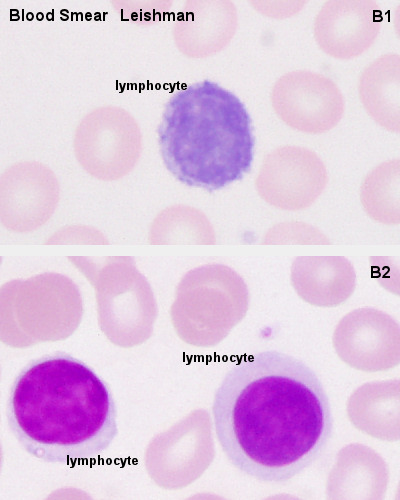 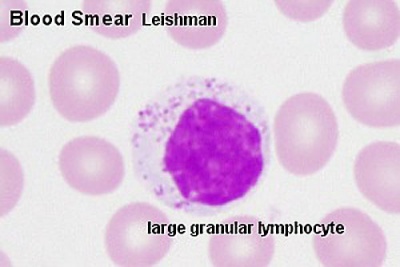
| B Cell Development
|
Germinal Centres
|
- Bone marrow
- blood
- Lymph node, nodule
- Lymphatic vessel
- Bone marrow
|
- Bone Marrow
- Medullary cords contain plasma cells
|
|
Plasma cells
- Activated B cell, plasma B cells, plasmocytes, effector B cells and B cell that is secreting antibody.
- secrete antibody directly into blood for distribution to all body
- in local extrafollicular sites are short lived 2–4 days
- longer-lived plasma cells in bone marrow 3 weeks to 3 months+
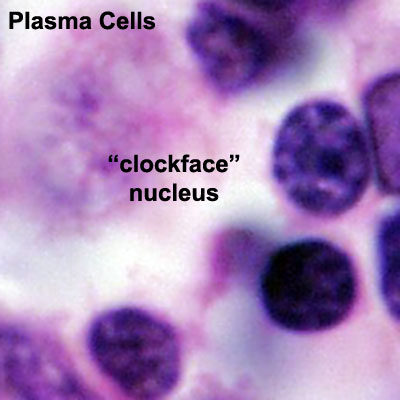
- "clockface" nucleus
- Nucleus has darker (heterochromatin) regions around periphery of nucleus separated by lighter (euchromatin) regions.
|
| Lymphocyte Electron Micrographs
|
| Histologically, there is little difference in appearance between T and B lymphocytes until activated.
|
Lymphocyte Circulation
- Microbial antigens are carried into a lymph node by dendritic cells, which enter via afferent lymphatic vessels draining an infected tissue.
- T and B cells enter the lymph node via an artery and migrate out of the bloodstream through postcapillary venules.
- Unless they encounter their antigen, the T and B cells leave the lymph node via efferent lymphatic vessels, which eventually join the thoracic duct.
- The thoracic duct empties into a large vein carrying blood to the heart.
- A typical circulation cycle takes about 12–24 hours.
Links: MBoC Chapter 24 - The Adaptive Immune System | MBoC Figure 24-14. The path followed by lymphocytes as they continuously circulate between the lymph and blood | Immunobiology
|


