Template:Male Vignette: Difference between revisions
From Embryology
(Created page with "{| |+ '''Historic Embryology''' |-bgcolor="FAF5FF" | 150px|left Caspar Friedrich Wolff (1734-1794) was a Germ...") |
mNo edit summary |
||
| (6 intermediate revisions by the same user not shown) | |||
| Line 1: | Line 1: | ||
{| | {| | ||
| | |-bgcolor="DDCEF2" | ||
| [[Historic Embryology Vignette|'''Historic Embryology''']] | |||
|-bgcolor="FAF5FF" | |-bgcolor="FAF5FF" | ||
| [[File:Blyakher1955 fig02.jpg| | | [[File:Blyakher1955 fig02.jpg|100px|left|alt=Caspar Friedrich Wolff (1734-1794)|link=History_-_Embryologists#Caspar_Friedrich_Wolff_.281733_-_1794.29]] [[File:Theoria Generationis 1774.jpg|100px|right]] | ||
Caspar Friedrich Wolff (1734-1794) was a German embryologist and anatomist best known today for identifying the {{Wolffian duct}} ({{mesonephric duct}}; {{ductus deferens}}, {{epididymis}}), {{Wolffian body}} ({{mesonephros}}) and Wolffian cyst (mesonephric origin uterine broad ligament cyst) that bear his name. Thought also to be a founder of the germ layer theory. His doctorate dissertation ''Theoria generationis'' (1774) discarded the developmental theory of preformation. Later in his career, his teaching in Berlin was opposed by the professors of the Medical-Surgical College, who had guild privileges to teach medicine. | |||
|}<noinclude>[[Category:Historic Embryology]][[Category:Male]][[Category:Genital]]</noinclude> | |}<noinclude>[[Category:Historic Embryology]][[Category:Male]][[Category:Genital]]</noinclude> | ||
Latest revision as of 17:34, 6 February 2020
| Historic Embryology |
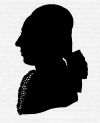  Caspar Friedrich Wolff (1734-1794) was a German embryologist and anatomist best known today for identifying the Wolffian duct (mesonephric duct; ductus deferens, epididymis), Wolffian body (mesonephros) and Wolffian cyst (mesonephric origin uterine broad ligament cyst) that bear his name. Thought also to be a founder of the germ layer theory. His doctorate dissertation Theoria generationis (1774) discarded the developmental theory of preformation. Later in his career, his teaching in Berlin was opposed by the professors of the Medical-Surgical College, who had guild privileges to teach medicine. |

